
Veteran suicide – when doing your best isn’t good enough
It’s the scout’s creed “Do Your Best”, but sometimes doing your best just isn’t good enough.
As published in The Mandarin 4 December 2024.
https://www.themandarin.com.au/282939-veteran-suicide-when-doing-your-best-isnt-good-enough/
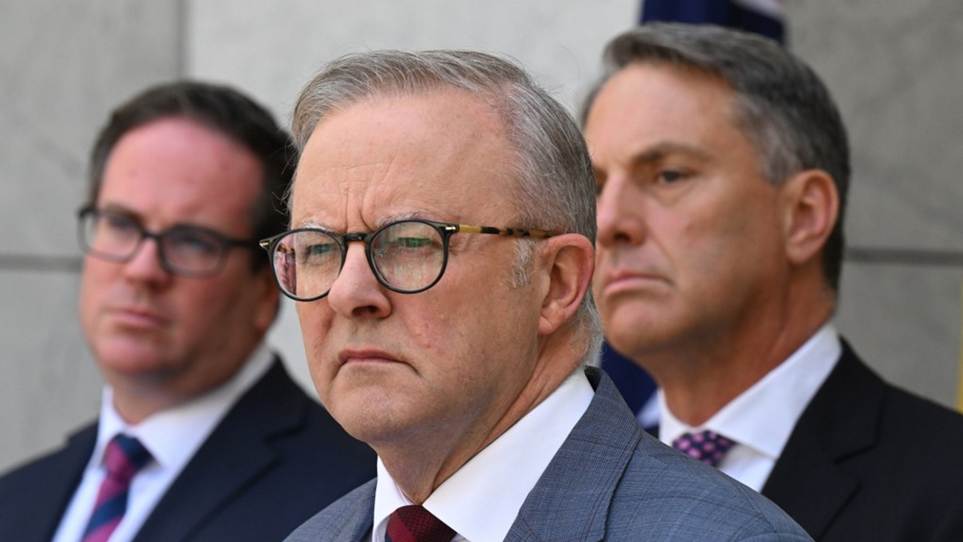
Australian Prime Minister Anthony Albanese, Australian Defence Minister Richard Marles and Australian Minister for Veterans’ Affairs Matt Keogh. (AAP Image/Lukas Coch)
When I was asked if I would like to write a few words on the government’s response to the Royal Commission into Defence and Veteran Suicide, I hesitated. It’s personal and painful, so I wanted to wimp out.
You know that game “Six Degrees of Kevin Bacon”? Choose an actor, connect them through a movie to another actor and with six steps you will have found Kevin.
Do it the other way. A veteran knows six people. Within six steps that’s nearly 50,000 people touched by their loss. It’s personal for a lot of people.
I lost a friend a few years back. I came into my office the following day and my office manager was in tears, “My husband is a multi-tour veteran. That could be me tomorrow. You need to do something about this.”
Her faith in me was great, but I didn’t get that job done and I let her down. So for all those people who are affected, and her, I’m writing this.
Fixing broken things in government has been my business for a couple of decades so we put our minds to the problem. We suggested just two steps and some ways to get them done, fast and affordably: don’t wait for the Department of Veterans’ Affairs (DVA) to call, reach out and engage with ex-service organisations (ESOs) by using people they trust. Nothing Earth-shattering, just good commonsense that seemed to be missing from the bureaucratic playlist.
Called in some favours, and got an audience or two and support from the government of the day. Until there was a change of minister, then the door from the department was slammed shut before the minister’s seat was even cold with the message “We are going to follow a different strategy”.
The message I actually received was: “This is my patch, don’t interfere, we’re doing our best”. The royal commission definitely didn’t think their best was good enough.
The public sector doesn’t want to change but needs to change its ways. We can’t afford that any longer.
That’s two royal commissions into the public service in recent times — veteran suicide and robodebt. Both damming indictments of the leadership of the public sector. Four departments institutionally let down the people they serve, with hardly a mention in this year’s State of the Service report.
The public sector leaders ought to be cringing at the evidence given by most of their colleagues, for it was truly cringeworthy. This royal commission was frank, fearless and ought to be devastating. Yet the leadership has yet to accept that their performance is unacceptable, and they need to change, quickly.
Change isn’t going to happen unless we do something remarkably different, and there are few signs of that happening. Neither has the government grasped the reins, and the royal commission might let them off the hook.
Commissions and reviews provide arm’s length recommendations that are generally accepted: 104 accepted, one rejected in part, 17 under consideration in this case. Makes for a great press release with little actual responsibility.
It’s no longer a government problem. Recommendations are closed out by the bureaucracy, and the issue fades away. If that’s the best they can do in this case, then “best” isn’t good enough.
Most of the commission’s recommendations are useful, but procedural and process-oriented. Consider the recommendation “Give members 21 days to make a complaint after being notified of a decision to terminate their service”. The departments don’t have to think about the intent behind that recommendation, just implement them and report that it has been done.
Tick. Closed. Return to business as usual.
Most of the commission’s recommendations are of that nature. If we are not careful, they will fade away.
The commission had a remit beyond suicide and suicidality to offer solutions in support of the wellbeing of serving, and ex-serving ADF members and their families. In this, departmental performance as well as process matters.
DVA sets itself low standards and continuously fails to achieve them. For example, only 50% of claims are required to meet their objective processing times, and largely those times aren’t met. There is no reporting on the failed 50%: who knows how long they take to be resolved? You get better outcomes in a game of chance.
There are dozens of difficult-to-understand performance measures with only the most inconsequential being achieved. Satisfaction with the services is reported in the mid-teens. History with these organisations is so poor that to trust that they will suddenly act in the best interest of the veteran must be forlorn.
The passing parade of ministers will always be ill-equipped to manage these issues. They must rely on the advice of the department which, sadly, reminds me of a comment in a recent podcast by Sue Vardon, the initial CEO of Centrelink: “Our biggest problem was the lies told by government departments to ministers”.
Politicians have their own imperatives and little actual responsibility. If the Westminster convention of ministerial responsibility for departmental maladministration was effective, ministers wouldn’t be in the job long enough for us to learn their names.
We lost a lot of colleagues, needlessly, before anyone sat up and paid attention. Unfortunately, veterans are simply not sufficiently influential enough to ensure they are served by governments as well as they served us.
There is, however, one recommendation that has real potential to turn this around. The commission recognised that departments will not accept accountability for the effectiveness of the reforms. It recommended the establishment of an independent oversight entity to oversee the effectiveness of the changes, to be reviewed in 10 years.
The government has agreed to the recommendation, with an interim head appointed soon, and the permanent oversight body legislated and operational by September.
The key to its success will be in its legislated scope.
Curtailing independent oversight is the common objective of a bureaucrat. Despite some 720 recommendations for improvement by past reviews of DVA, they failed to change. Fifty reviews in 50 years of Defence, it’s hard to see it as a markedly better performer. Every gap in oversight will be an opportunity for the poor and unregulated performance to continue.
The departments involved have failed veterans and their families. They have proved wanting and should not be given the benefit of the doubt that they will suddenly change, that they will embrace their obligations and markedly improve performance.
More likely, they will persist with the bureaucracy’s indulgence of obfuscation and avoidance, evasion and excuse, for they know no other way.
The commission limited its commentary on the entities’ functions to matters regarding suicide and suicidality. The suggested scope and functions of this entity are too narrow to deliver the assurance that veterans deserve. It’s not just a matter of what changes, it’s how quickly and how well it’s implemented, and how well it continues to be delivered — across all veteran-related services.
Veterans need process, performance and certainty outside the election cycle. This is too important to leave to the public sector and the current processes of government. We need to implement this oversight differently.
Rather than a standard response of “accepted”, this was one recommendation that the government could have and should have expanded upon. No bureaucrat wants oversight, but they need to earn that privilege. Right now, governments formed from either side of politics need help in managing bureaucratic inertia and resistance.
It’s too late to fix it in the response to the royal commission, but it’s not too late to fix it in the legislation. As the royal commission proposed, we should at least try something different for a decade.
When it comes to DVA, Defence and others, doing their best may not be good enough.
They have to deliver the best to those they support — in this case, veterans of all shapes and sizes who gave their best when asked.