
Critical thinking in negotiations: The APS pay negotiation as a case study
Every negotiation is littered with claims, and many have external influences and commentary adding further pressure to the negotiators. It can be part of a negotiating strategy, not everything need be done at the table. I admit to having applied those pressures, and generating such influence is often the role of lobbyists.
Dealing with such influence can be complex, but the heart of any response is to look at the claims critically. A recent article in The Mandarin regarding the current APS pay case provides a useful case study.
The Mandarin (here) reports that the APS pay offer has been “belittled” by state outcomes. Presenting a headline argument that way does set reader expectations. It does, in effect, play to our anchoring bias: the first claim sets the basis for the negotiation. This is a common play, though the effect is often not recognised. The best negotiators have to inoculate themselves against such claims. Look at the numbers behind the claim.
The case rests on the Wage Price Index. Public sector wages grew 3.9%, the states are winning, and the Commonwealth is falling behind.
Like all good claims it is true, from one perspective. This claim needs critical review. Under what circumstances does that claim hold, and where is it weak and might be countered? Exploring alternate perspectives is the art of a good negotiator.
Growth might not be the right metric. It does measure how rapidly salaries have changed but offers no deeper context around level. What if the states were catching up to an already higher paid APS? The rate of change for the states would understandably be higher than the APS.
The comparator is also wrong. Good negotiators look for both deliberate and inadvertent misrepresentation of data. Mistakes do happen, often, as does selective presentation of the data. There is a natural leaning to represent information in a way most favourable to one’s argument. This predilection should make a negotiator cautious of all data driven claims.
In this case the ABS attributes state wage growth to nurses, midwives and police. These are cohorts with no APS equivalent. The APS’s real comparators are state clerical staff, and the numbers suggest they have much the same as or less than the APS offer. NSW clerks received 3% in July; Queensland agencies 2.5% in September.
Negotiators earn their money when they can look at data and do the numbers. They don’t have to be analysts themselves, but they need the insight to know what questions to ask.
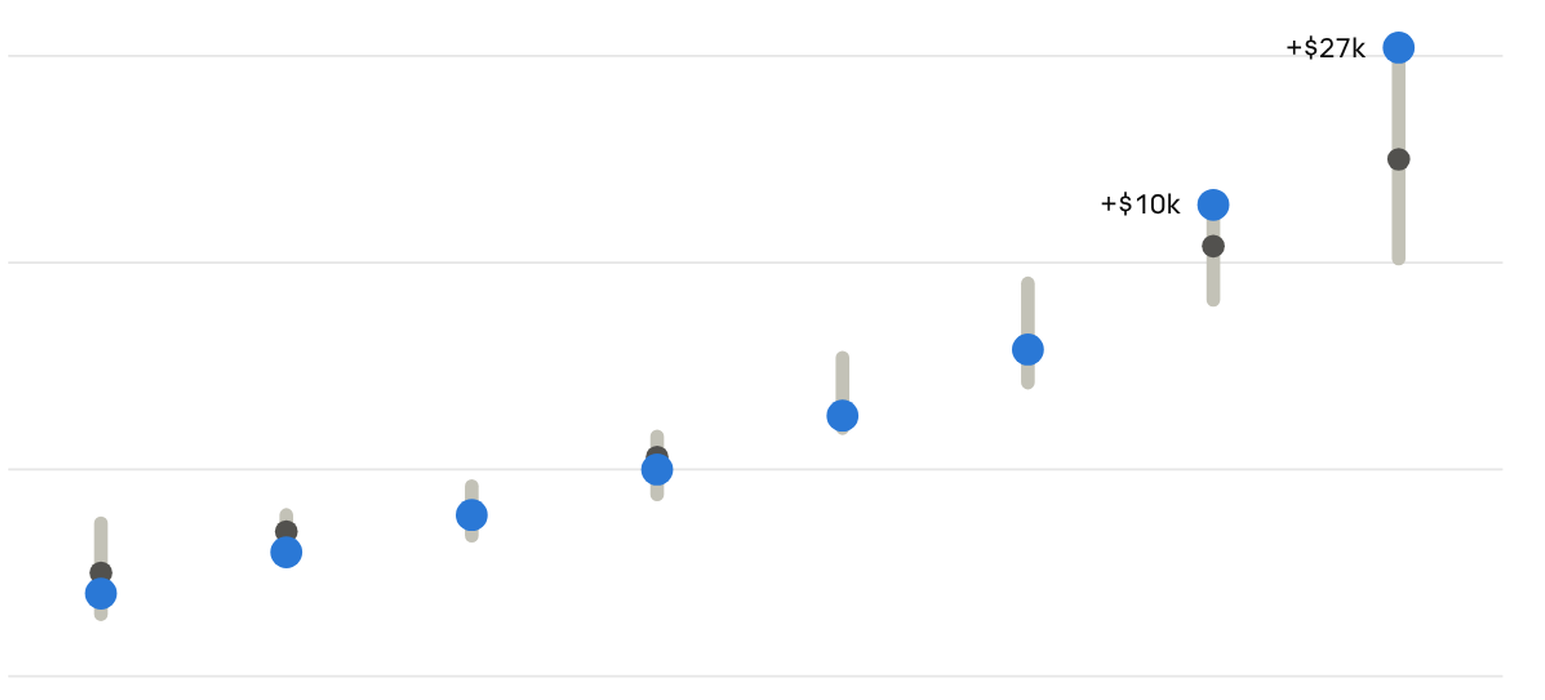
In this case, a negotiator might ask where the APS actually sits? It turns out that the data is quite discoverable, not perfect (it rarely is) but sufficient to sustain an alternate view, as seen in the diagram below. APS1-6 are at or just below state median. EL1s are about $10k above the state median, and EL2s are the highest in the country at $27k above the state median.
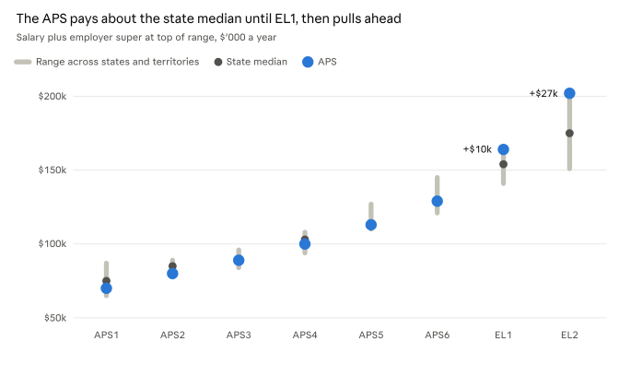
Levels matching is approximate; no official national equivalence exists. Rates as published November 2026.
The EL1/2 cohort has also grown about 60% over the last decade. One might argue that at least some of this growth has been caused by classification creep.
There are three essential tools available to a negotiator:
- Inoculate yourself against claims. Just because someone makes a claim doesn’t mean it’s true.
- Be open to alternate perspectives and think critically. Test the claims, and your own prejudices.
- Embrace data. Data doesn’t argue, its presentation does. Look for the biases and don’t weaken your argument by following suit. Honesty is harder to counter in a negotiation than misrepresentation and opinion.
Being a good negotiator takes effort – but delivering great outcomes is worth it.


