
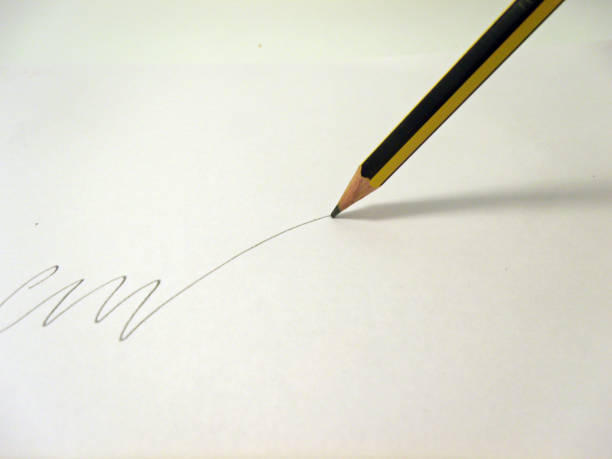
I visited Bilboa because of a 2B pencil
I’ve been on holidays to Spain. Old houses, monasteries, castles, everything I was told to see. My wife takes amazing photo’s, I make very clever, funny, insightful, acerbic comments, mostly on Facebook for all to see. The only place I insisted on visiting was Bilboa and one of my exceedingly clever comments attracted a response, “I’m really looking forward to the article explaining why.”
To kickstart (again) my writing after a holiday and interlude, here’s the explanation. I doubt it’s entirely what you think.
It starts with user centred design.
Perhaps 20 years ago, as is the way with the management consulting industry, a new fad hit the market –design thinking. We had PowerPoints and processes for user and service centred design. Tim Brown (IDEO, 2009) produced “Change by Design” and Roger Martin (2009, Harvard Business Press) put the Rotman Business School on the map with clever marketing and “The design of business.’
Contrary to much of today’s commentary, not everything management consulting companies do is wrong. Much of it is founded in solid thinking. Equally though, much of it is good marketing designed to scale their business. I like to go to test the truth, be inquisitive, explore the ground truths that are presented as self-evident. No excuses, it’s quite easy today, a few prompts with your favourite AI, chase down an article or two. Practice some critical thinking.
I went to school. Design thinking has been around for a long time, the province of “designers”. Those who think about how to make a better potato peeler, a juicer and the thousands of other devices we use every day. I signed up for a Design 101 course at one of the US universities known for their expertise in the field. I can’t actually remember but online courses were more audio than video, and more reading than doing.
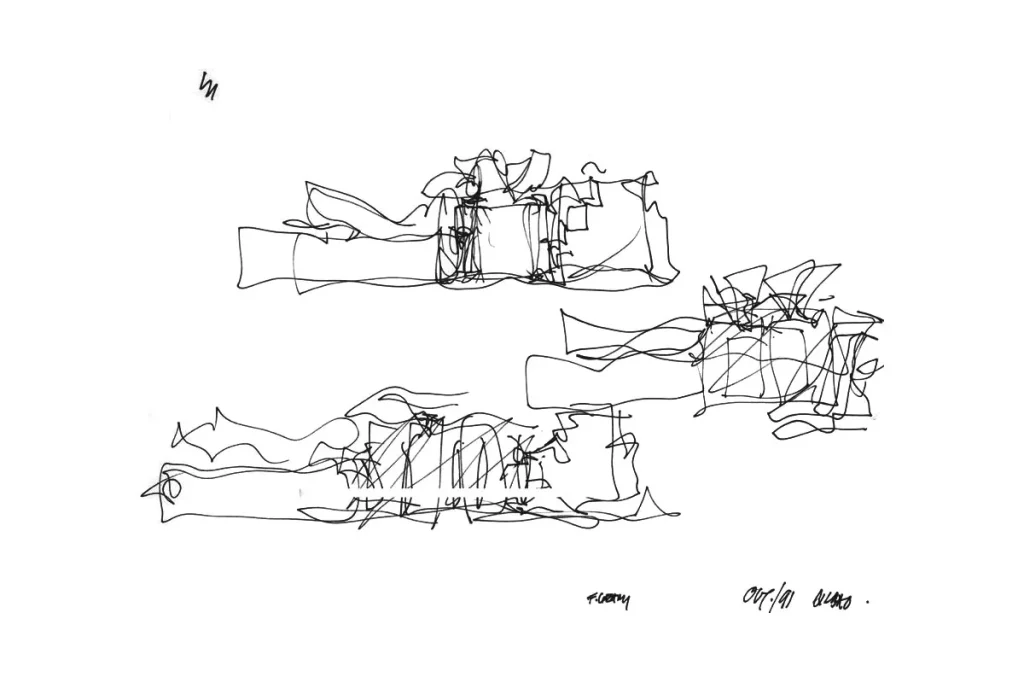
Most of what I learned in that course has faded the way most course content does. But one case study stuck Frank Gehry’s design process for the Guggenheim Museum Bilbao.
Gehry famously worked in large-scale paper and soft 2B pencils. Not because he couldn’t get his hands on better tools, he could have had anything he wanted, but because the tools shaped the thinking. Fine pencils, rulers, sharp lines encourage you to the detail of the rivet and the doorframe. Computer systems enforce someone else’s thinking on you.
He insisted on a thick 2B pencil on big paper, allowing him to stay at the level of gesture, form, and movement. It allows you to think, to dabble, to explore.
The early sketches and models for the Guggenheim look almost nothing like the building that eventually opened on the banks of the Nervión. The early work wasn’t meant to predict the final form. It was meant to keep the thinking loose long enough for the right form to emerge.
I took that into Kiah, my consulting company, A3 pads and pencils. Teams used them when planning projects. Staff used them on their desks. They were never missing in a conversation with me, about anything. Large scale doodling.
We started running workshops and having conversations with clients using A3 pads and pencils. Especially for problem solving, options development, strategy planning, and negotiations. Fewer words, more pictures, less constraints.
There’s something about handing a senior executive a pencil and a blank sheet of A3 that changes how they engage, after the first weird look. A slide deck or a digital tool already implies a level of finish. It says “this is close to done, react to it.” A blank sheet and a soft pencil say the opposite: nothing here is settled yet, and your scribble is as valid as anyone else’s. People stop performing and presenting certainty they don’t have.
They start drawing boxes and arrows they’d never dare put in a paper or slide deck. They are free of process and rules, able to think and innovate unconstrained. Those rough boxes and arrows often turn out into unexpected insights and new opportunities. Getting it done is a process, discovering what to get done, that’s innovation and leadership.
I went to Bilboa to satisfy my curiosity, and I was surprised again.
I discovered that they did something extraordinary
Thirty-odd years ago, Bilbao was a city built on hundreds of years of history in shipbuilding, steel, and heavy industry. The industry collapsed in the 1980’s delivering severe unemployment and industrial unrest. The river was polluted, the city industrial and unpleasant, and the city’s identity was disappearing. Most city leaders would have fought the inevitable, seeking handouts and privilege to prop up an inevitable end.
Instead, the city took an enormous, almost irrational bet: rebuild the whole urban identity around culture, design, and public space. They found the funds to engage the Guggenheim Foundation as the anchor of a much larger transformation. A new metro system designed by Norman Foster and an airport designed by Santiago Calatrava. A cleaned-up river, reopened as a public asset rather than an industrial drain, and a redeveloped waterfront. This was a city refusing to let its past define the shape of its future.
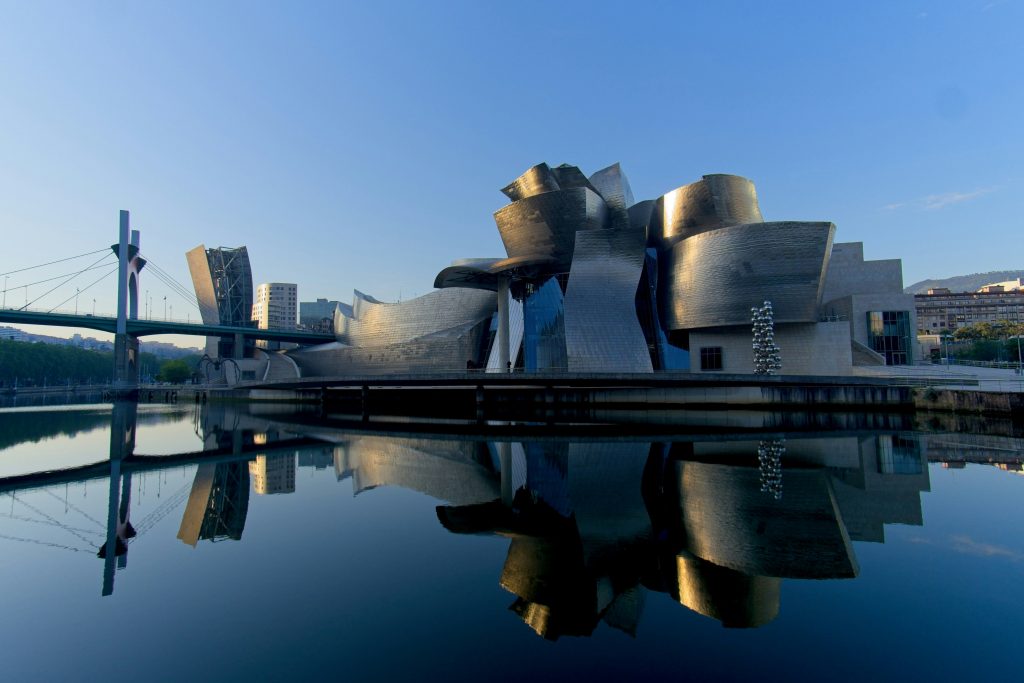
Today, it’s a pretty city. It has education and industry, centred around its historical roots but in a modern context.
Walking around Bilbao, what struck me was the courage to build a strategy and enact it.
People also travel around the world to see the Guggenheim. I did.


